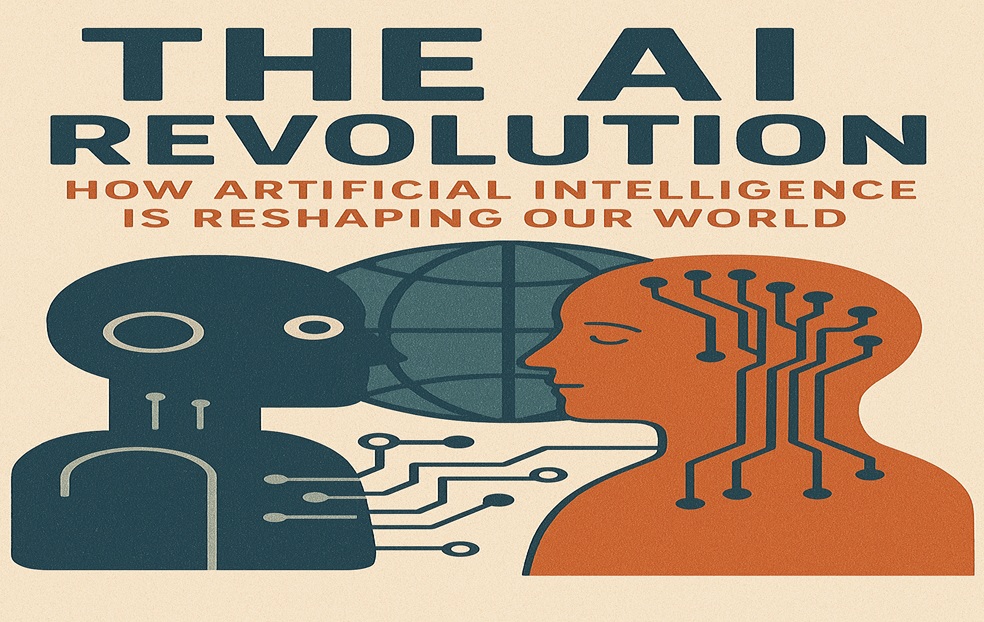
The idea of artificial intelligence (AI) is no longer limited to science fiction or scholarly study; rather, it is a revolutionary force that is changing economies, industries, and our daily lives. AI is at the heart of contemporary technology breakthroughs, from sophisticated predictive analytics in healthcare to virtual assistants like Siri and Alexa. This article explores the many sides of artificial intelligence (AI), including its development, uses, difficulties, and potential developments.
AI’s Development
When computer scientists first investigated the possibility of building robots that could mimic human intelligence in the middle of the 20th century, artificial intelligence (AI) got its start. The foundation for comprehending machine learning and artificial problem-solving was established by Alan Turing’s groundbreaking research in the 1950s. Early AI systems, however, were limited by computational power and lacked the sophistication of today’s algorithms.
In the twenty-first century, advances in neural networks, huge data availability, and processing capacity have made artificial intelligence (AI) more widely accepted. Artificial intelligence (AI) applications are already commonplace in many industries thanks to advancements in deep learning, natural language processing (NLP), and computer vision.
Important Uses of AI
Medical Care
AI is transforming healthcare by making it possible for enhanced medical imaging, individualized treatment regimens, and predictive diagnostics. Disease diagnosis, medication development, and patient monitoring are being aided by technologies such as Google’s DeepMind and IBM Watson Health.
Money
Algorithmic trading, fraud detection, and risk assessment are all being revolutionized in the financial industry by AI-powered solutions. AI is used by robo-advisors such as Wealthfront and Betterment to effectively manage financial portfolios.
Retail
AI is used by e-commerce behemoths like Amazon and Alibaba for predictive analytics, inventory control, and customized shopping experiences. Virtual assistants and chatbots improve customer service.
Transportation
AI-powered autonomous cars are going to revolutionize transportation. Leading companies in the development of self-driving technologies that promise safer and more effective transportation include Tesla, Waymo, and Uber.
Learning
AI-powered learning services like Coursera and Duolingo offer individualized instruction. By accommodating different learning styles, these systems improve academic results.
Amusement
AI is transforming recommendation systems and content production. AI algorithms are used by streaming services like Netflix and Spotify to make content recommendations based on customer preferences.
Difficulties and Moral Aspects
AI has a lot of promise, but it also presents many difficulties and moral conundrums.
Fairness and Bias
Biases in the data that AI systems are educated on have the potential to be reinforced. It is crucial to guarantee equity and openness in AI decision-making procedures.
Privacy Issues
Concerns regarding the security and privacy of personal data are raised by the application of AI in data analytics. These problems are intended to be addressed by stricter laws like GDPR.
Displacement of Jobs
AI-driven automation poses a threat to job displacement across multiple industries. The socioeconomic impact must be addressed by policymakers through the promotion of workforce retraining and skill development initiatives.
Accountability
It is difficult to assign blame for decisions made by AI. Determining legal and ethical responsibilities becomes crucial as AI systems grow more independent.
Risks to Security
AI systems are susceptible to abuse and hostile attacks. Strong cybersecurity safeguards must be in place to stop malevolent exploitation.
AI’s Future Trends
XAI, or explainable AI
Systems that can explain their thinking and judgments are becoming more and more in demand as AI is included into crucial decision-making processes.
Using AI to Reduce Climate Change
AI is being used to create sustainable behaviors, improve the use of renewable energy, and model climate patterns.
AI Edge
Real-time data processing on gadgets like smartphones and Internet of Things sensors is becoming possible because to the transition from centralized cloud-based AI to decentralized edge computing.
Artificial Intelligence in Space Travel
AI is helping NASA and other space agencies plan future missions, analyze astronomical data, and automate spacecraft navigation.
Artificial Intelligence
The development of human-like text, graphics, and other media is being advanced by technologies such as OpenAI’s GPT and DALL-E.
Unquestionably, one of the main pillars of 21st-century technical advancement is artificial intelligence. Its applications cover a wide range of domains, providing answers to some of the most important problems facing humanity while posing fresh queries on privacy, ethics, and the effects on society. Governments, businesses, and individuals must appropriately utilize AI’s potential as it develops to guarantee that this formidable technology serves all of humanity.